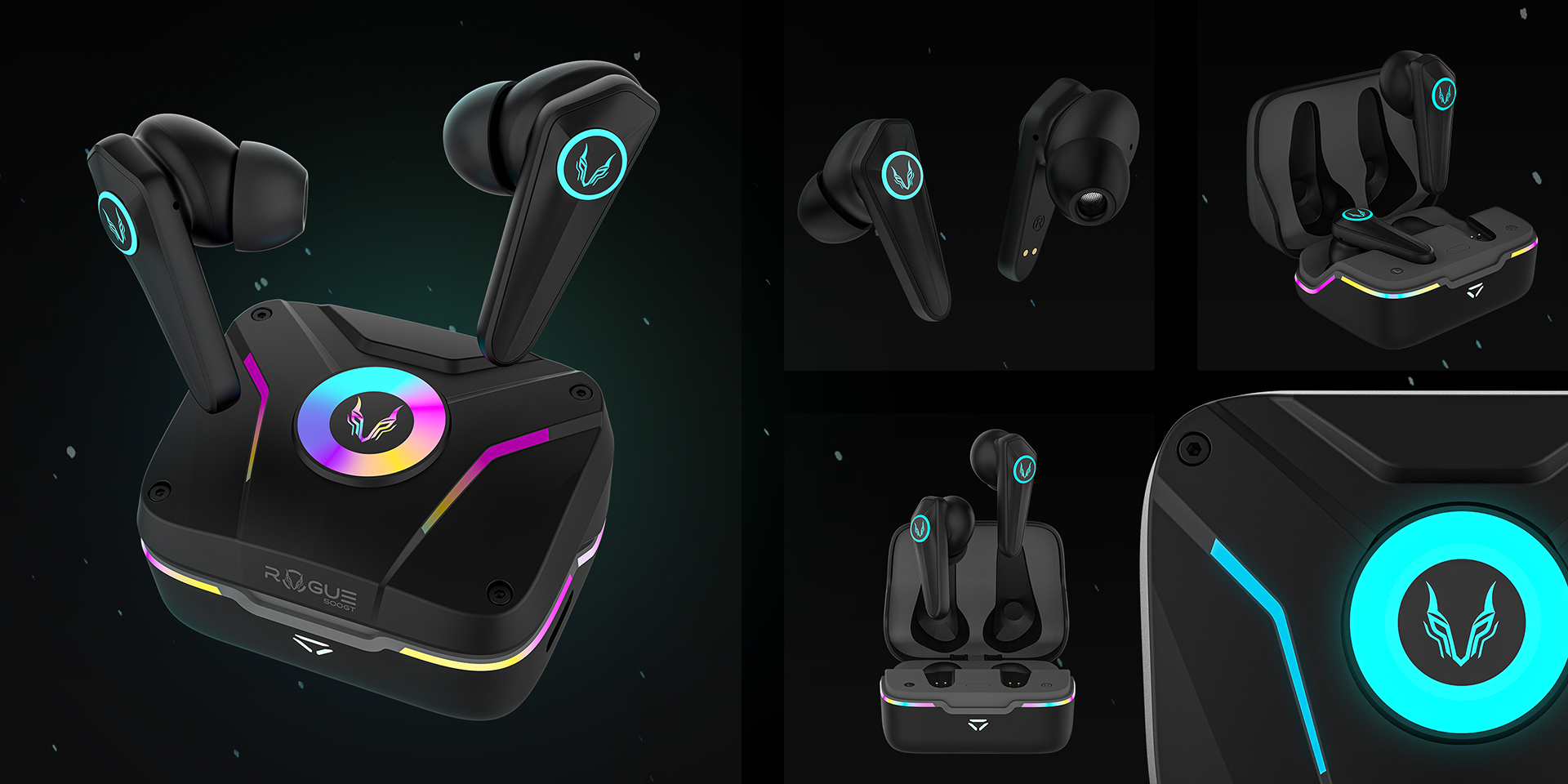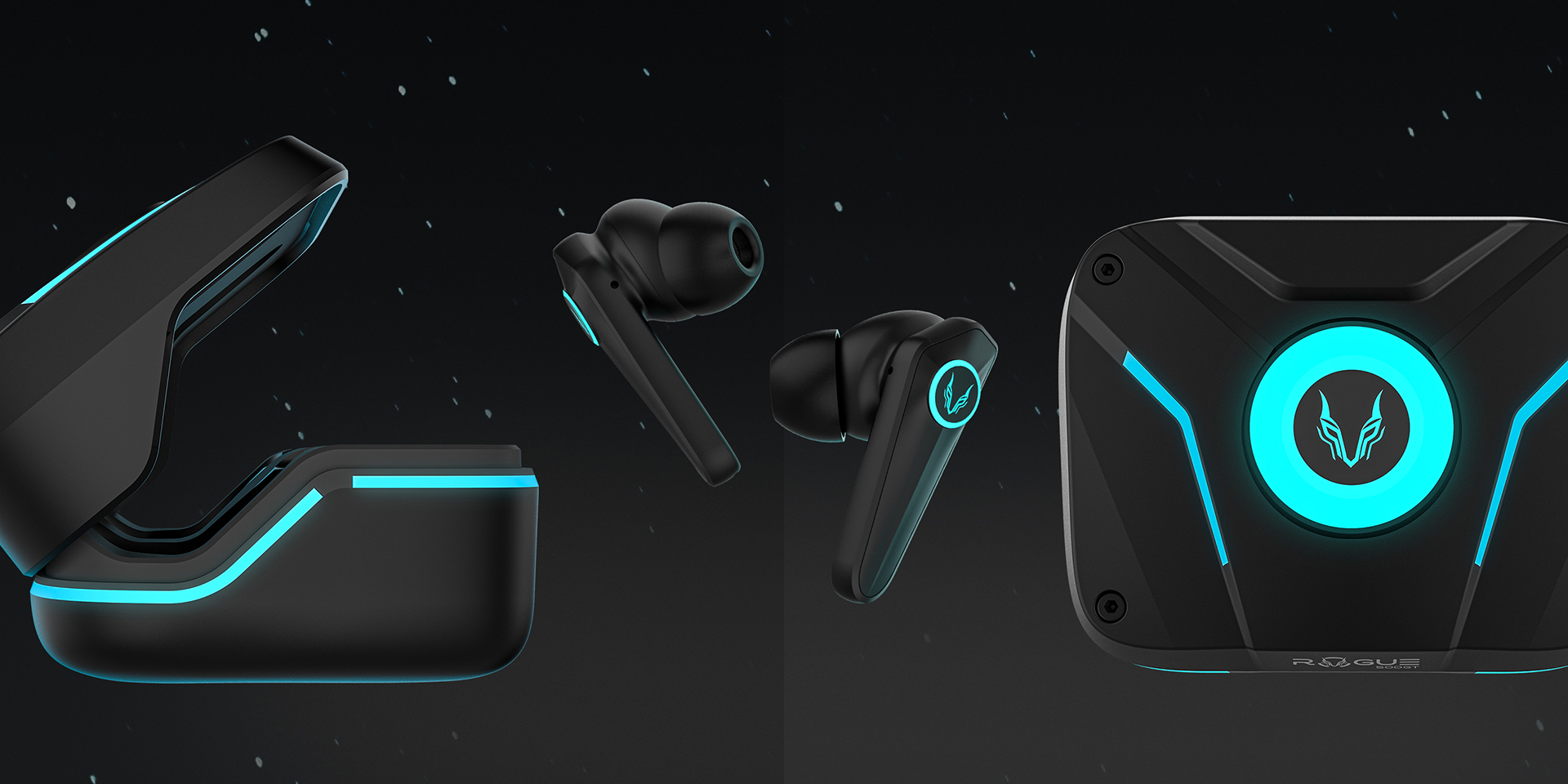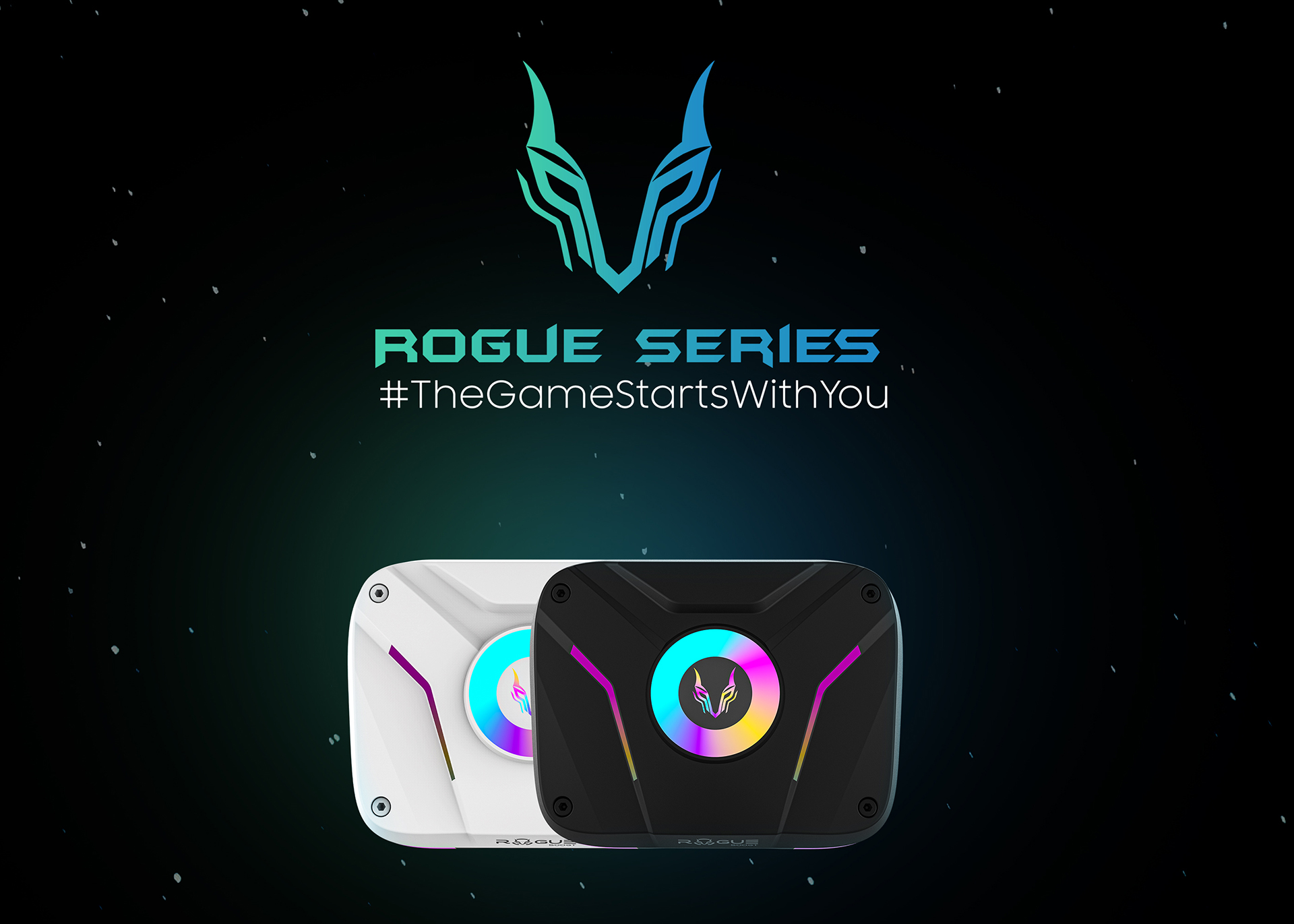
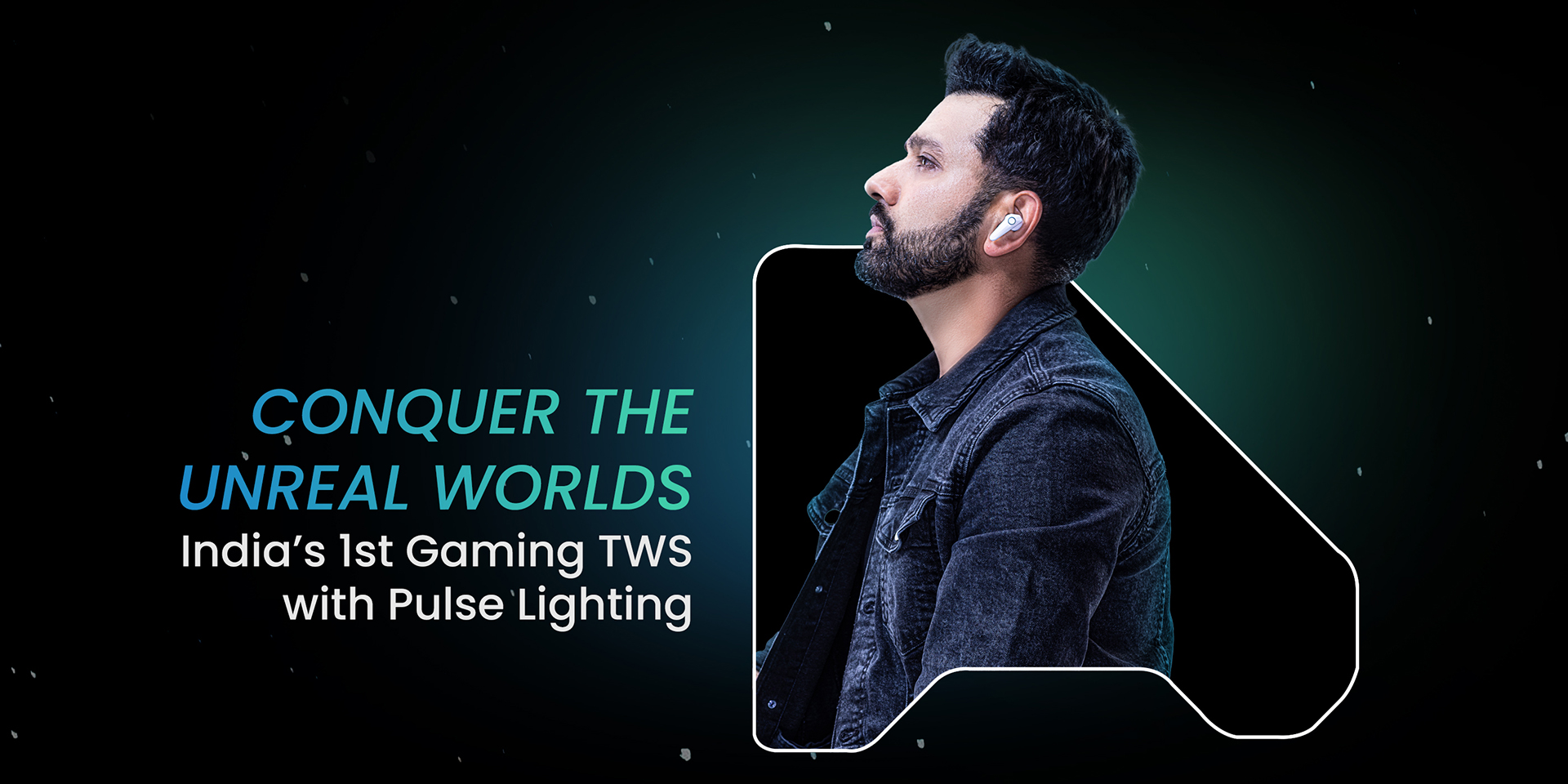
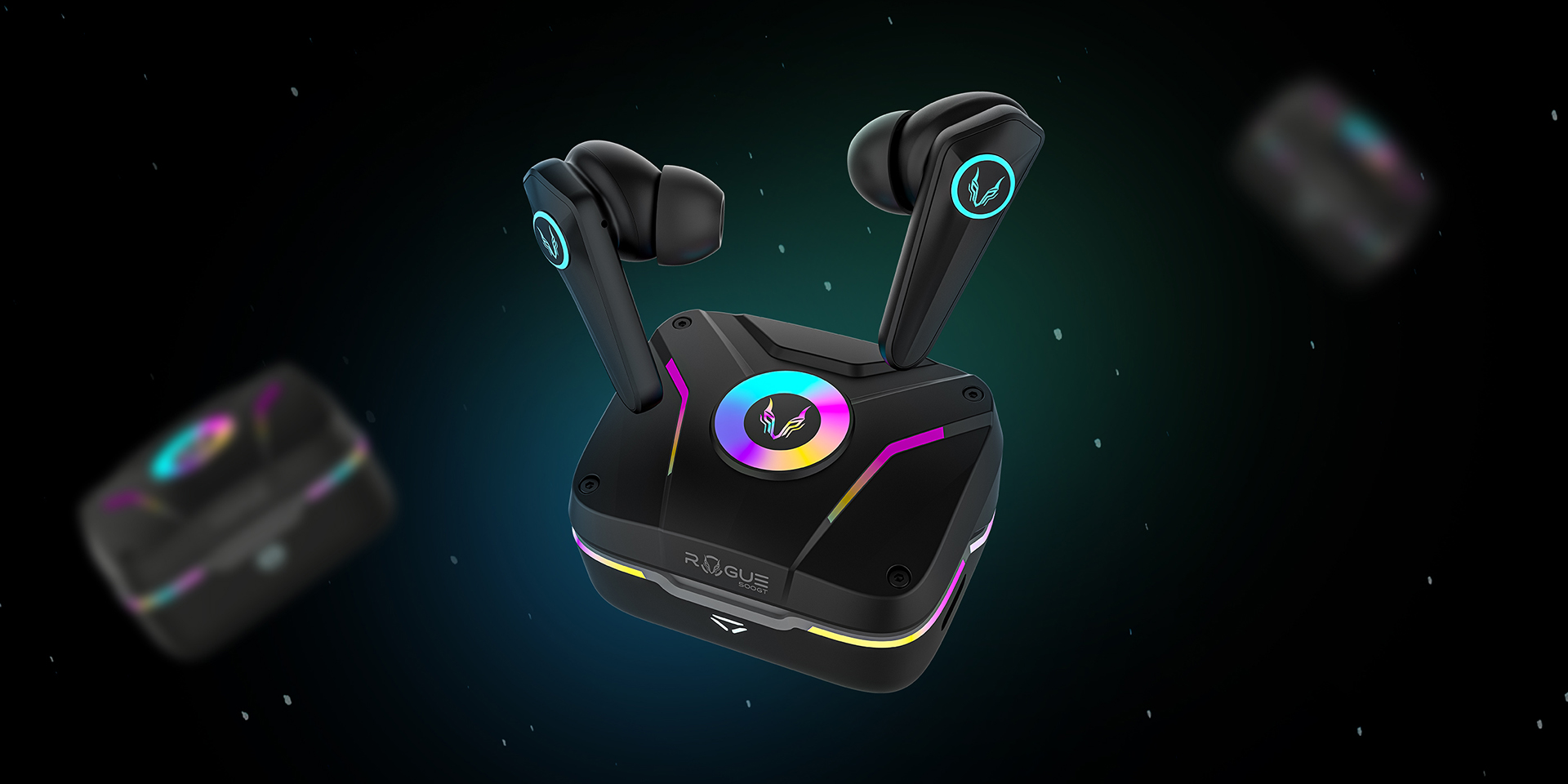
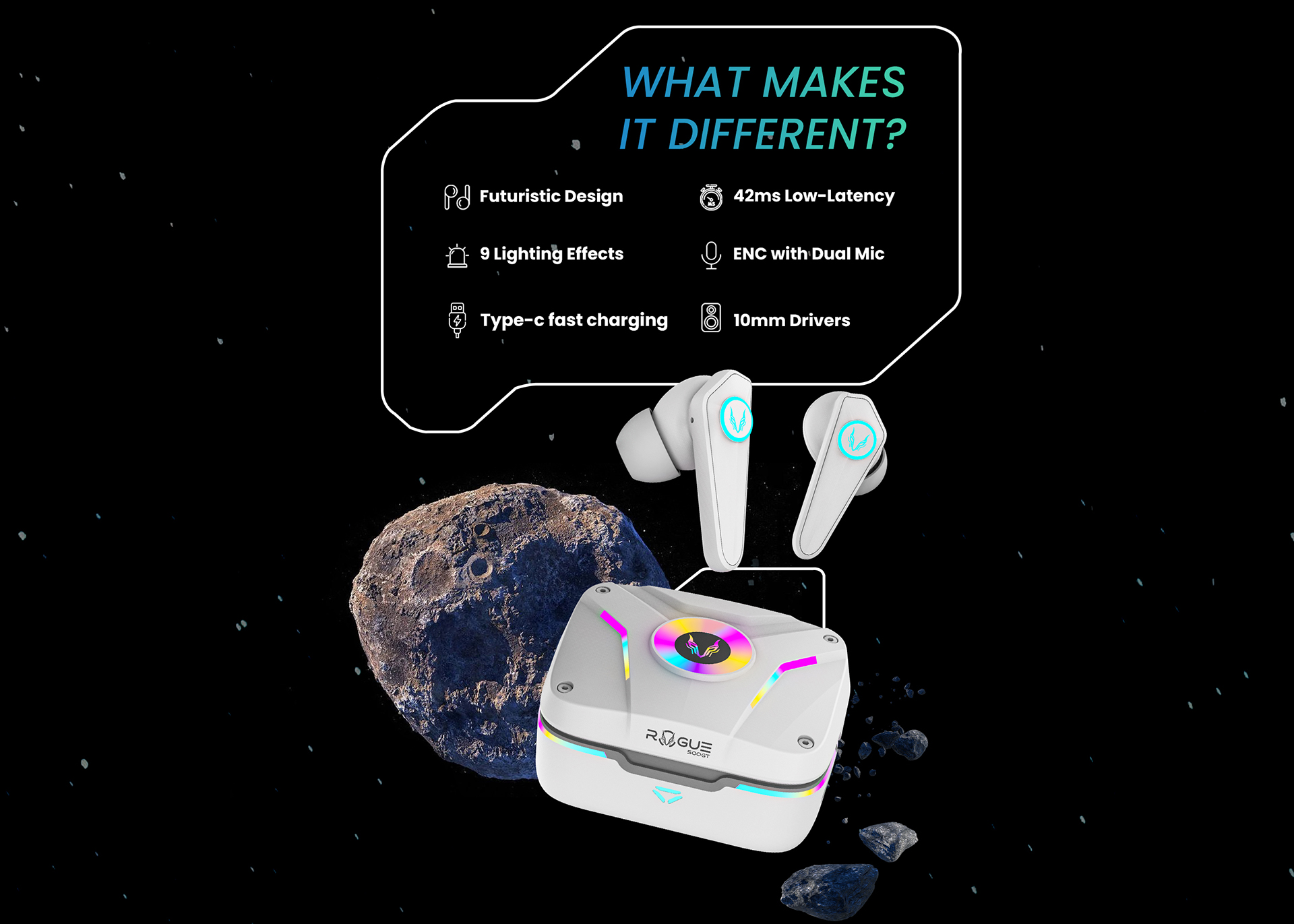
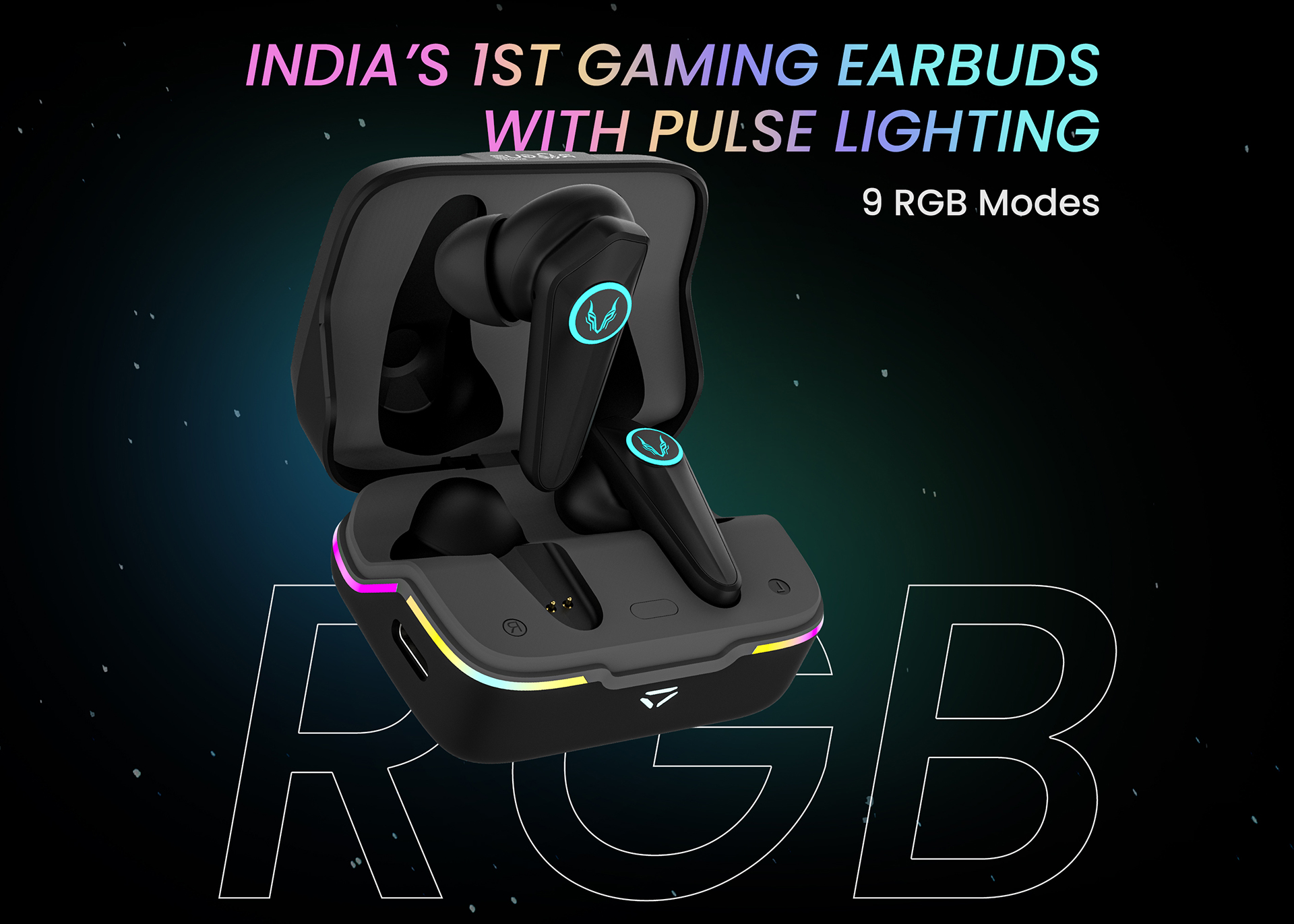
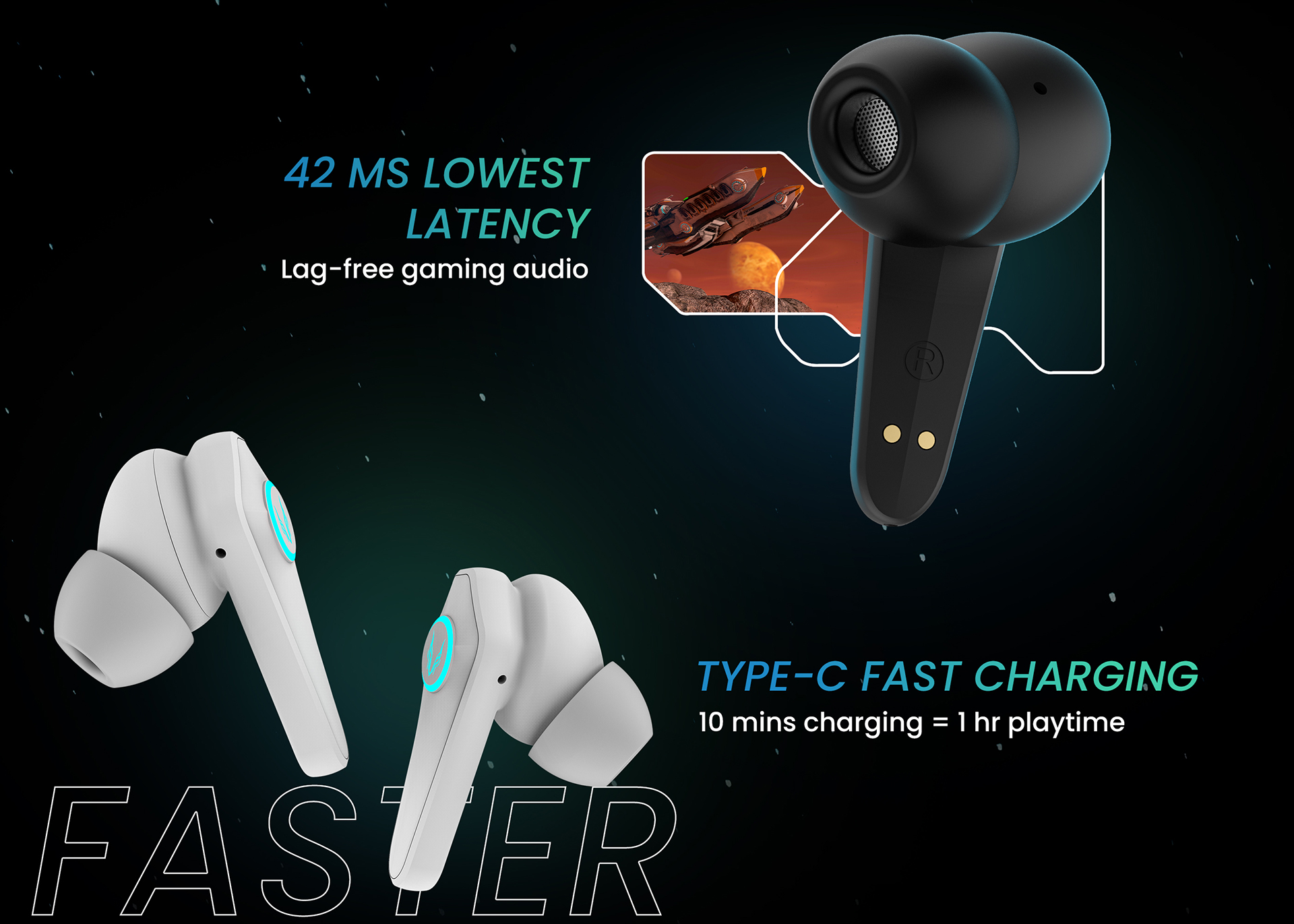
Rogue 500GT is India’s first gaming-true wireless earbuds designed for gamers who demand speed and style. With ultra-low latency (42ms), nine different RGB pulse lighting modes, and three built-in EQ modes—Gaming, BassX, and Balanced—it delivers immersive audio performance. The design combines futuristic aesthetics with ergonomic build and distinct branding to stand out in a competitive market.
Objective
To design a gaming-earbud that not only delivers high-performance audio and low latency, but also offers a strong visual identity via RGB lighting, bold forms, and clear branding. The goal was to balance tech specs with a distinct, memorable style that appeals to serious gamers.
Details
Time Frame:
Role:
Product Designer, Visualizer
Involvement:
3d Rendering, Product Designing
Design Features & Approach
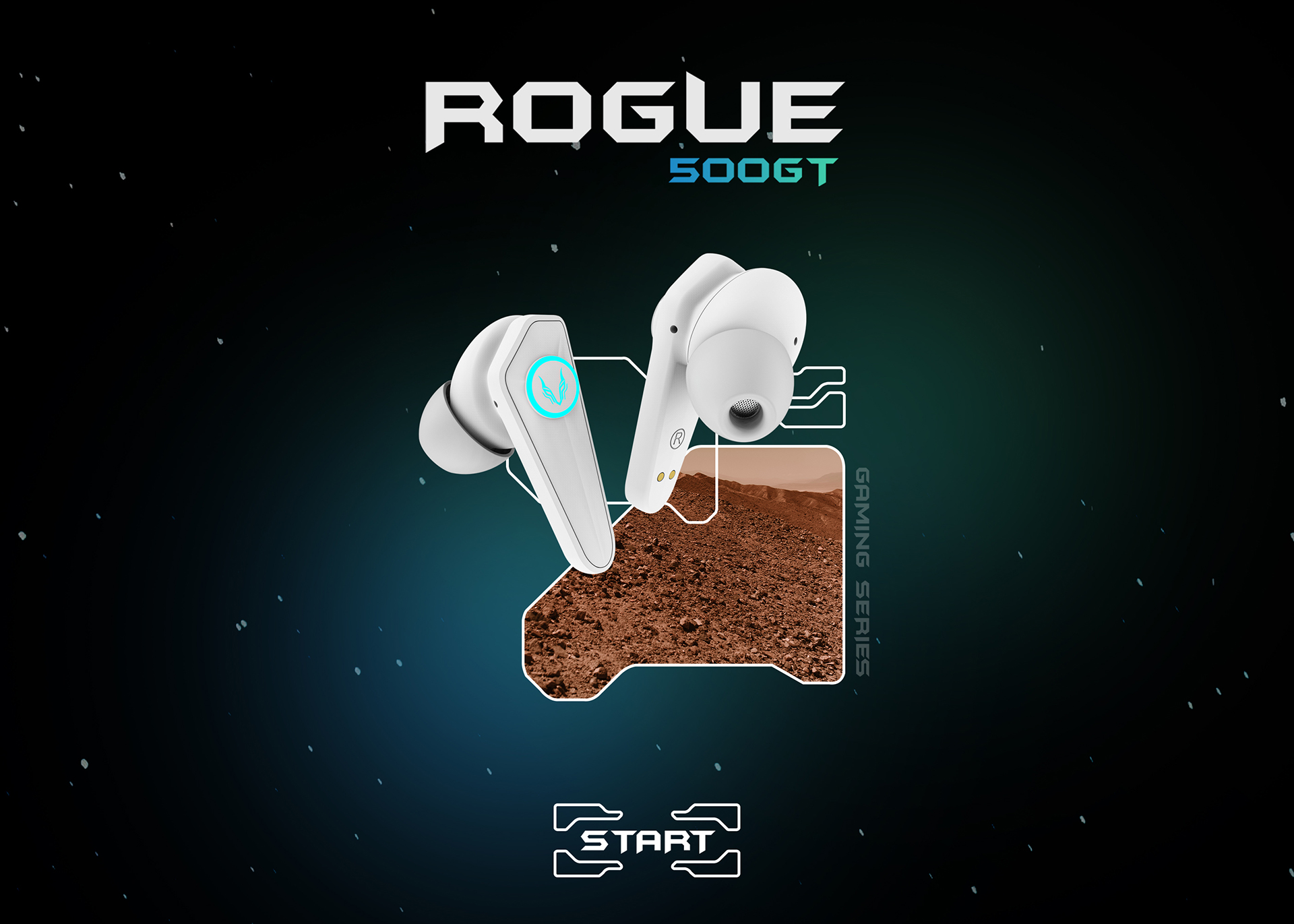
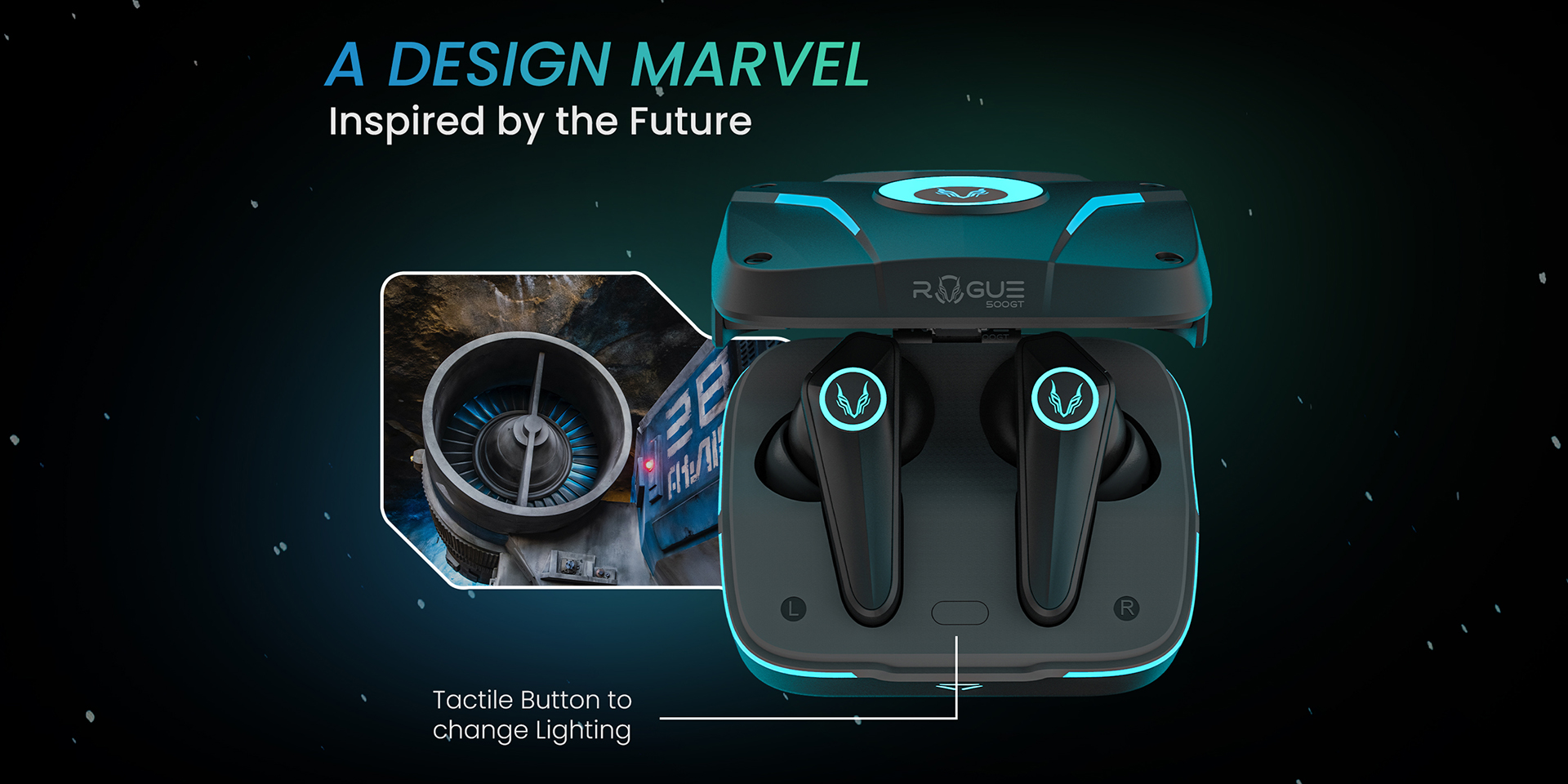
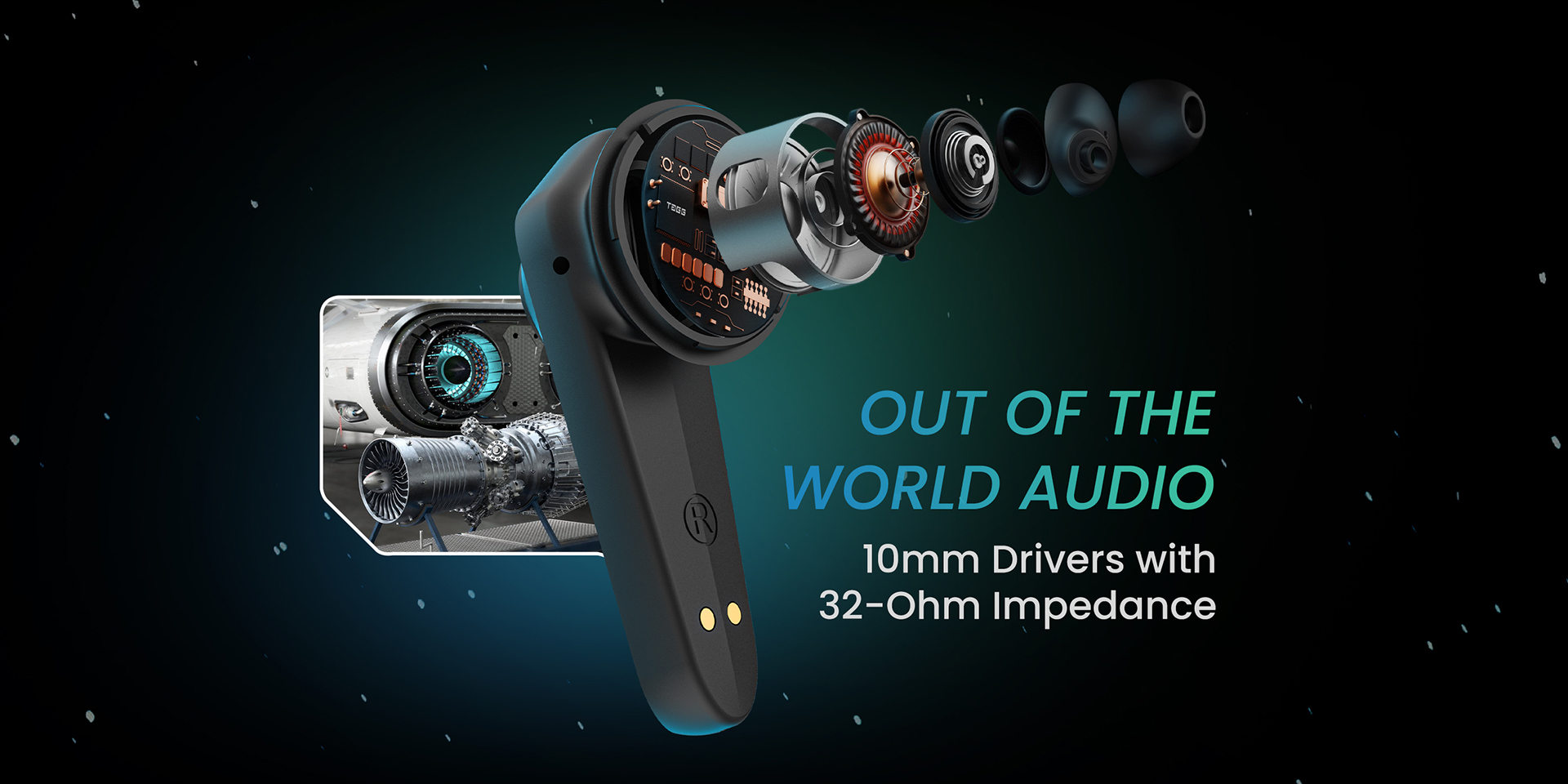
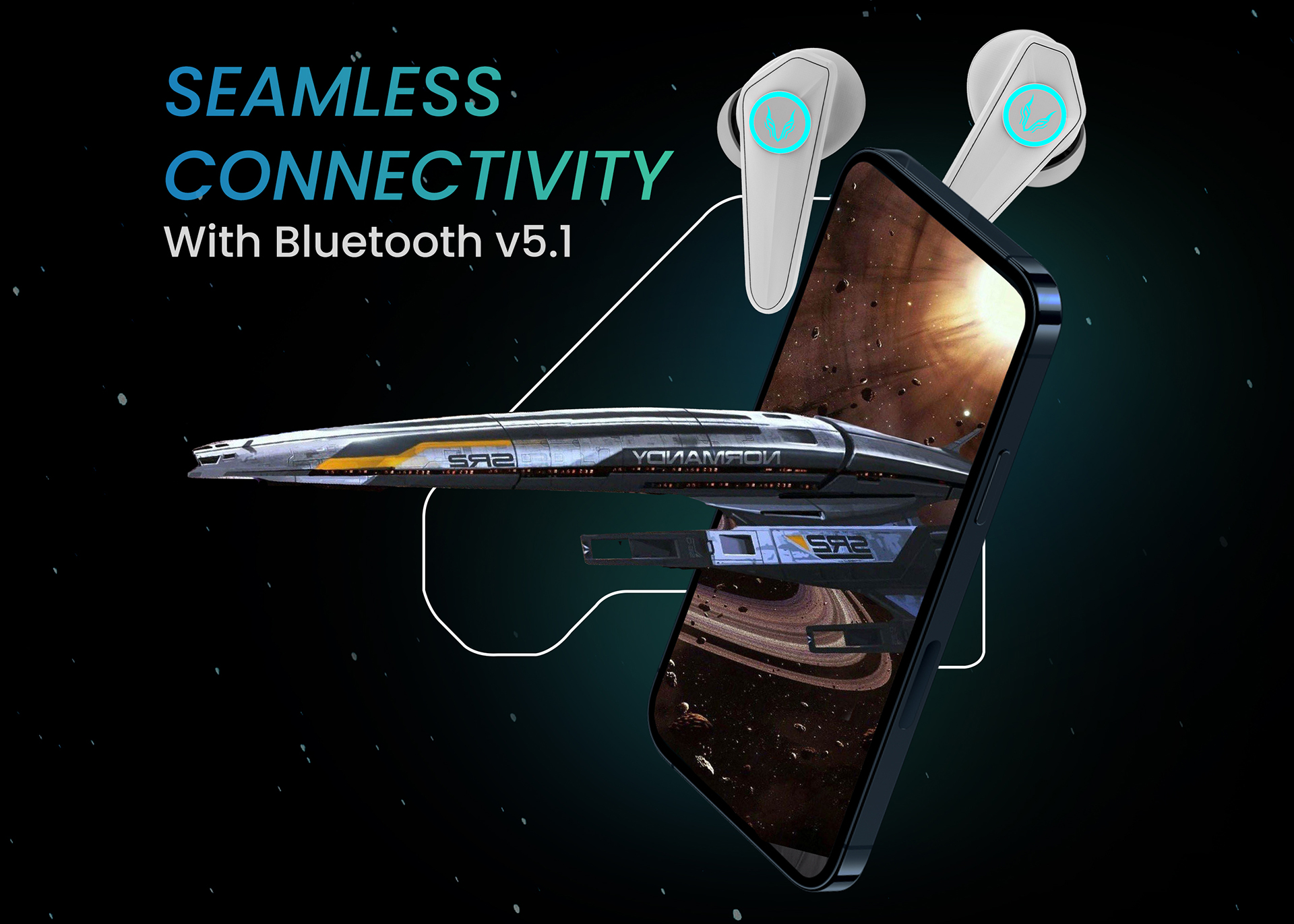
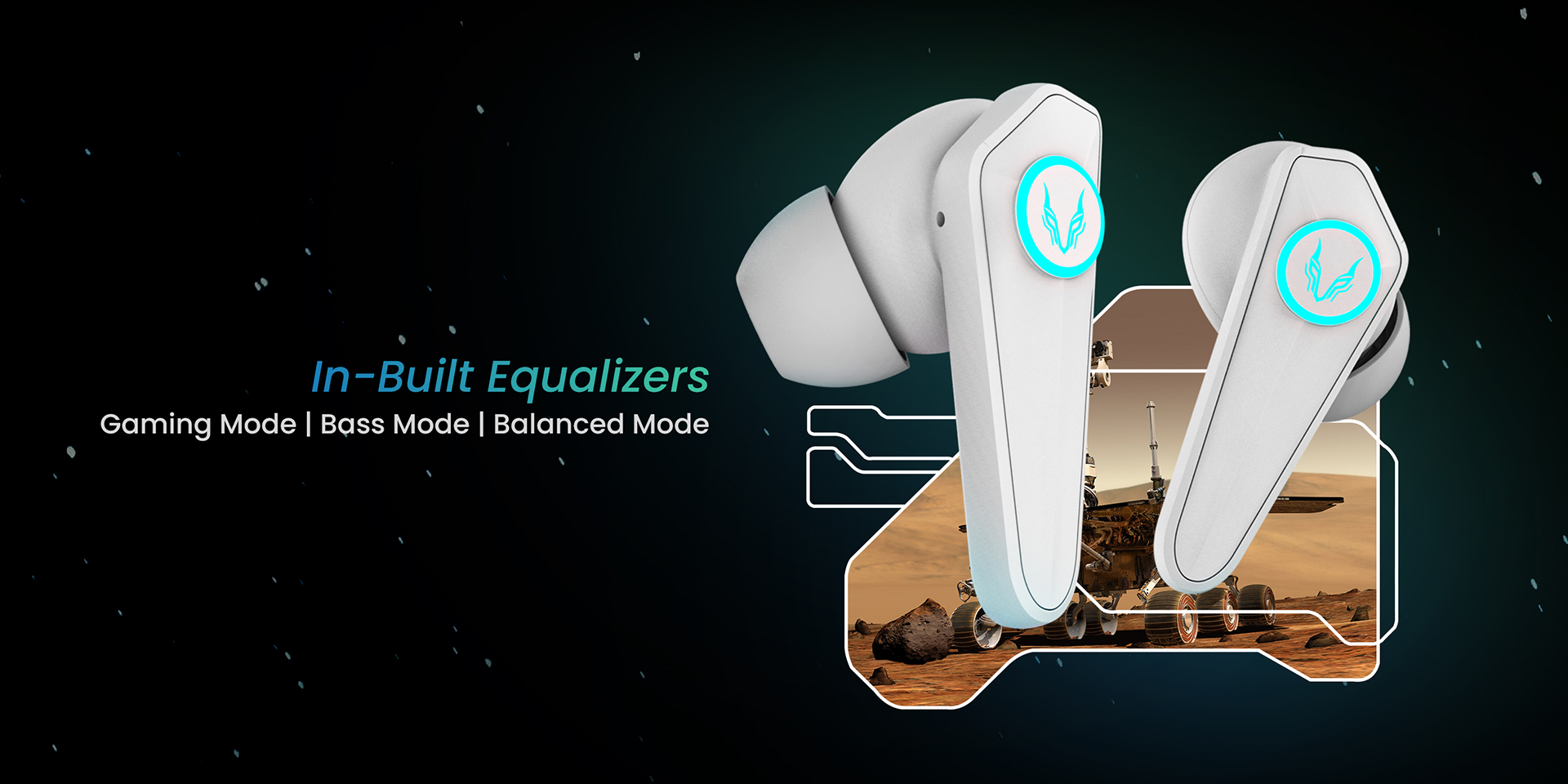
The Rogue 500GT earbuds were designed with performance and style at the core. They feature an ultra-low 42ms latency, ensuring that every shot, step, or move in a game registers instantly without perceptible lag. To give gamers the freedom of personalization, the earbuds integrate nine RGB Pulse Lighting modes that add a futuristic and dynamic visual flair. Audio versatility was achieved with three built-in equalizer modes—Gaming, BassX, and Balanced—easily activated through long-press functionality. To bring the concept to life, I developed high-fidelity 3D renders and mockups that showcased the earbuds in realistic scenarios, highlighting product views, lighting effects in action, and practical use cases. The overall design emphasized bold geometric shapes and gaming aesthetics, with sharp edges, accent lighting, and striking details that projected a strong identity of high-speed, high-energy, and high-style.
Challenges & Learning
One of the main challenges was ensuring that the RGB lighting modes felt distinctive and visually appealing without overpowering the product. Balancing brightness and contrast was key to avoiding a gaudy appearance. Another challenge was finding the right harmony between futuristic aesthetics and ergonomic comfort, as the earbuds needed to look striking while remaining practical for long gaming sessions. Incorporating branding elements such as the logo, lighting accents, and material finishes also required careful thought to ensure they felt like an integrated part of the design rather than an afterthought. Additionally, visualizing how the earbuds would perform under different lighting conditions—such as dark gaming environments versus natural daylight—was critical to aligning renders with real-world expectations.
Case Story (Problem → Solution → Result)
Problem
The market for true wireless earbuds is saturated. Many offerings provide generic designs or prioritize either comfort or performance—but rarely both. Gamers often face noticeable audio lag, uninspiring visuals, and lack of personalization. As gaming culture continues growing in India and globally, there was a need for a product that delivers on both performance (low latency, good sound) and visual identity (stylish lighting, branding) that gamers can be proud of.
Solution
I designed the Rogue 500GT earbuds with these priorities:
- Performance: Achieved low latency (42ms), included multiple EQ modes for different listening preferences.
- Custom Lighting: Added nine RGB lighting/pulse modes to give gamers a way to personalize their gear.
- Visual Identity & Branding: Created a bold design with integrated lighting accents and product aesthetics aligned with gaming culture—sharp edges, accent lighting, and premium-tech feel.
- Prototyping & Visualization: 3D renders to simulate different lighting conditions, mockups showing both product details and experiential scenarios, to ensure design translates to real use.
Result
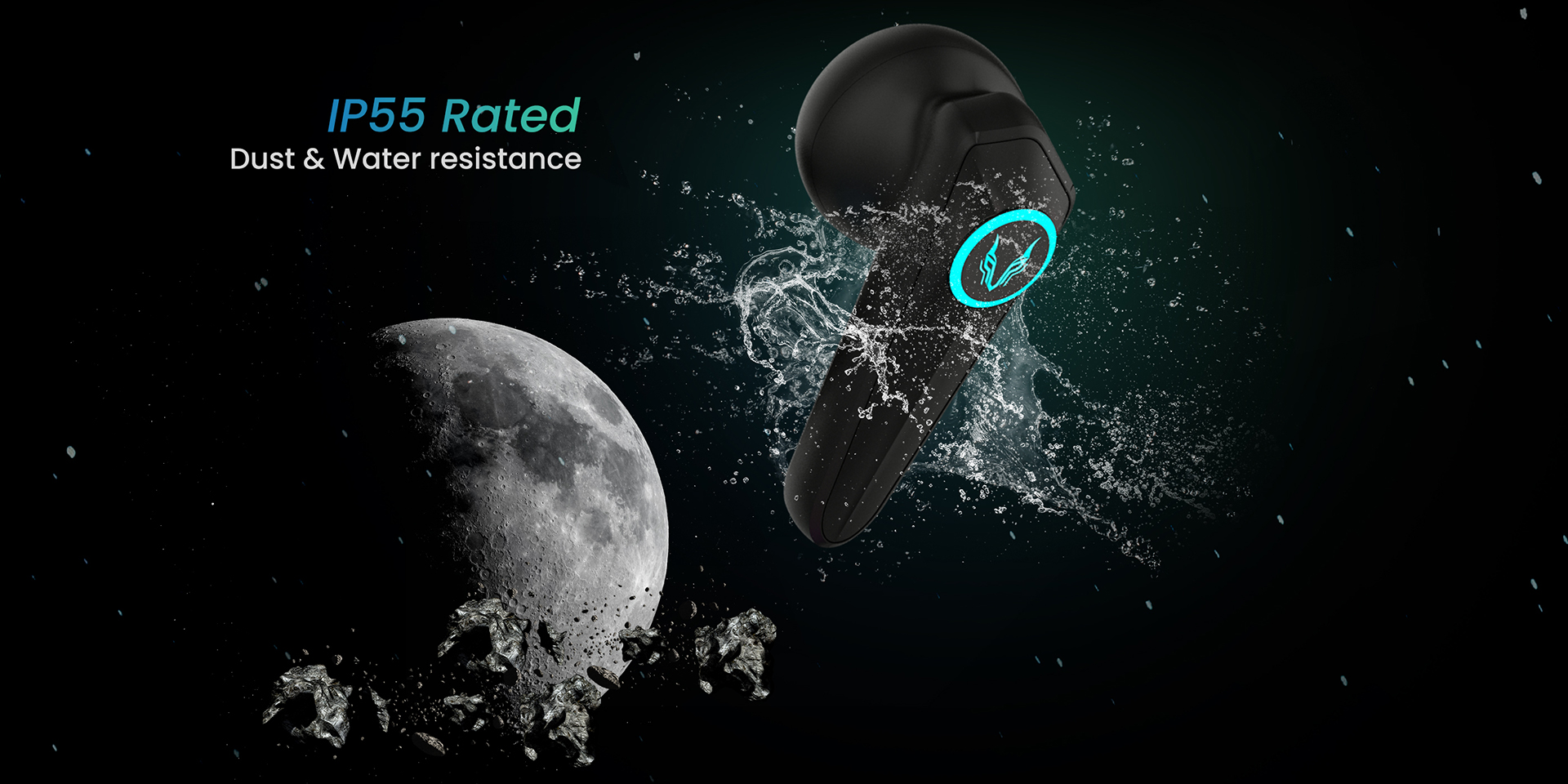
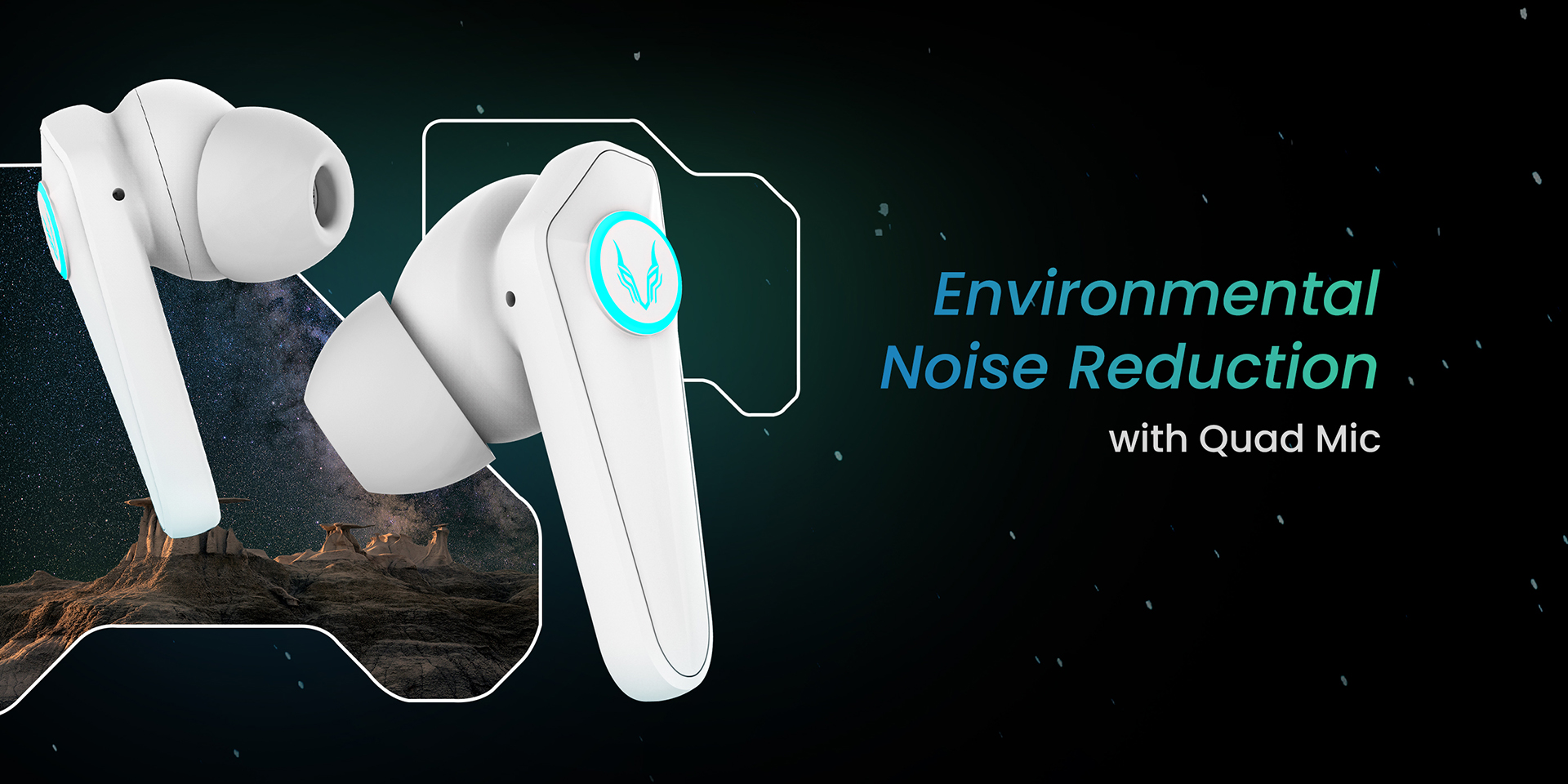
The Rogue 500GT embodies both style and substance. It delivers responsive audio experience, stands out visually among competitors, and strengthens the brand’s presence in the gaming gear space. The product visuals (renders) helped in marketing by illustrating features clearly, making it more attractive to tech-savvy buyers. In short: the design elevated the product’s identity, helped communicate its performance claims, and created better consumer appeal.